
Burning the books: on Anthropic’s Project Panama


The philosopher Michel Serres observed that knowledge must be paid for in its own currency: the cost of new knowledge is the destruction of old knowledge. This philosophical point has been dramatically and directly played out by Anthropic, the AI company behind Claude and, alongside OpenAI which runs ChatGPT, one of the two major players in the AI world. Project Panama was Anthropic’s ‘effort to destructively scan all the books in the world‘ according to its own internal documents. Millions upon millions of books had spines sliced off, the pages scanned and the remnants pulped for recycling. Many of these books – almost certainly the vast majority – were out of print, and no allowance was made for rare books or unique manuscripts. In a practice that AI companies continue to vigorously pursue, physical books are being bought and destroyed to train models. This includes books that are already digitalised, and books which are not.
The large language models Anthropic runs for customers were built on millions of pirated downloads. Buying the books it has already pirated is basically a loophole: a resolution to the legal challenge this creates confirmed in a ruling by District Judge William Alsup in June 2025 (the same ruling also led to Anthropic paying out a $1.5bn to resolve a class-action suit by authors and publishers). Alsup said that what Anthropic was doing is ‘quintessentially transformative’: training does not mean that it intends to ‘replicate or supplant’ the source books ‘but to turn a hard corner and create something different’. And the books are ‘destructively scanned’ simply because it’s efficient. If you don’t care about collective memory, it’s the fastest way to scan millions of books. Judge Alsup felt that this destruction was actually part of what makes Anthropic’s use of the books transformative, and not a copyright violation (especially since it did not plan to distribute the scans).
However, it’s obvious that by training its AI models on the pulped books, Anthropic is harvesting the content of the books to reproduce the knowledge they hold without acknowledging the source of that knowledge. Whatever you think of copyright and its copyleft alternatives, having your work blended anonymously into an AI output through a model training process without so much as a citation is a destination very few authors support for their work. That’s presumably why Anthropic had to make $1.5bn available to authors (roughly $3000 per harvested book) to settle a class-action lawsuit – and why it tried to keep Project Panama a secret.
Bear in mind that Anthropic had already consumed pirated digital versions of the most commonly-cited works, so that ‘destructive scanning’ of most of the books isn’t actually necessary. Such a sacrifice of culture, the legally sanctioned destruction of millions of already digitised physical books as a means of symbolically (and legally) anointing their transformation into the numbers (known as weightings) that power generative AI responses, is simply wanton destruction. It is the action ‘of an algorithmically determined capitalist system that is sliding ever further into madness’.
However, as any researcher can tell you, there are also vast swathes of literature, journalism, video, film and audio which are unlikely ever to be digitised. The true darkness of Project Panama (and doubtless, its many imitators) may be the wanton annihilation of print runs of books that we will never see again by businesses who won’t bother to retain the images once their contents have been chunked up into tokens and fed into model training. We are burning the Library of Alexandria.
But who will notice, or care? The priority for society is digital, not physical experiences. If a walk through a city centre in the UK is anything to go by, we are through the looking glass. Glued to our phones, we inhabit a world of AI mediation and greater and greater abstraction. What defines us less and less is our embodiment in this place of smell, touch, taste, sight and sound, but the pixels we take up on one another’s screens. If you’re reading this, then we are no exception. Our planet is most certainly physical, but our worlds are becoming more and more digital. We are addictively wired into the pleasures of scrolling, of AI coding, of the vertiginous delight in digital experiences that feel fulsome, even as they are empty: ‘the human animal as a conscious being is now inextricably trapped in the clutches of the machine at a neural, hormonal level’.
Central to this digitalisation is the flux of enormous amounts of information between networks of servers within data centres, a system that is naturally centralised. A case in point is how an enormous portion of the web now runs on AWS, or Amazon Web Services. The problematic nature of centralised information exchange is clear to us and is demonstrated by the COVID event of 2020. Points of view on the situation were designated as ‘right’ or ‘wrong’. Adherence to a viewpoint was either incentivised by algorithmic boosting or punishable by de-banking and de-platforming of those who dared question the narrative. We see a repetition of this in the swift punishment of those who dare to say they support organisations like Palestine Action. The algorithm knows all, sees all and is all.
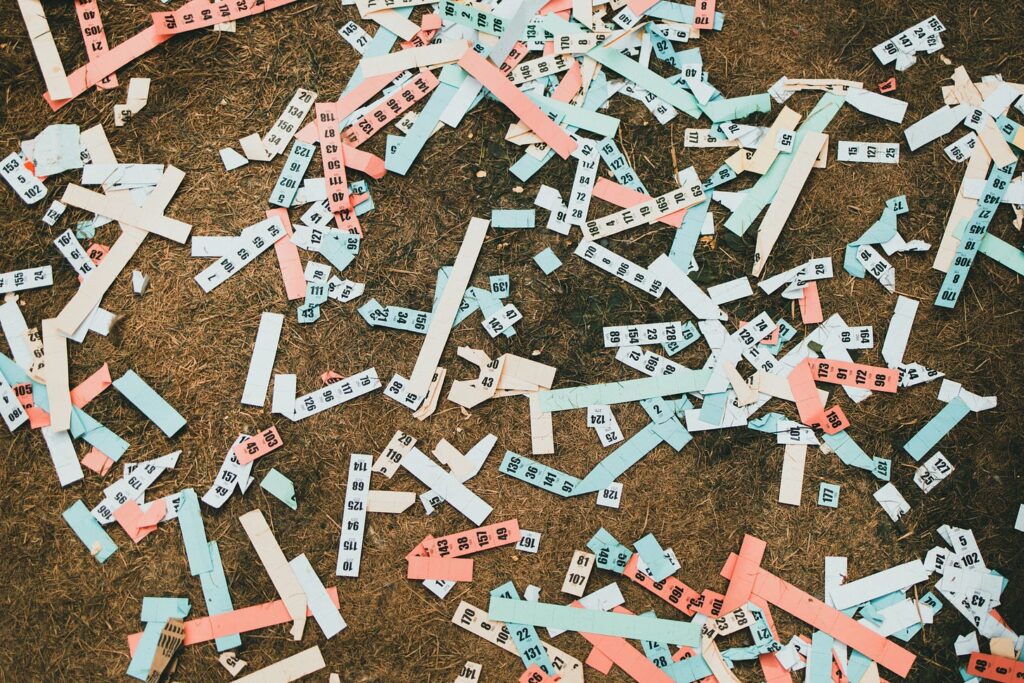
We cannot unmake the digital, including the developments in AI. But a flight from centralisation is an appropriate act of resistance. Peer-to-peer networks, localised data storage and the use of open-source systems must form part of any liberation. Books fit such characteristics, being exchangeable between peers, fully self-contained and using that which is innate to us: language.
It is therefore unsurprising that those who wish to centralise, monopolise and control are on a mission to take the book from an embodied form into simple, abstracted, controllable bits. Anthropic’s industrial scale desecration of books in what is both a symbolic and real leap into abstraction. Words feed into word embeddings. Concepts become training weights and can be promoted or hidden from view depending on how our algorithmic zeitgeist changes. The memory hole is being dug. There is no business case for the preservation of that which is rare and unique.
Once these books are replaced with bits, they’re gone, and Amazon’s deletion of editions of Orwell’s Animal Farm and Nineteen Eighty-Four from Kindle devices, demonstrates that once that happens, we lose control over our information.
At Real Left, we unreservedly condemn the act of shredding books, and the trajectory it represents. We take this moment to encourage our readers and supporters to be in the physical, localise their information storage, and share that information in as physically embodied a form as they can.
“It’s a very clever kind of story-telling gadget. It doesn’t need batteries, contains almost a megabyte of data, generates no system noise, and is small enough to carry almost anywhere. You can access it instantly, at any point, and you can back up or skip ahead, in moments. The data-transfer rate is about 250 baud – slow by computer standards, but at least twice as fast as a talking tape. The storage medium is permanent and unaffected by heat, cold, or magnetic fields. It should last at least half a century, perhaps longer. No extra equipment is required, to use the gadget; it’s fully self-contained. The only snag is that you have to be a skilled operator to use it, and Jane doesn’t have that skill. Alone in her aluminium room, she sits and stares dumbly at the pages of what her grandmother used to call… a book.”
—Platt and Langford, Micromania (1984)


Comments are closed.