
The Rhodesian Dog Whistle: Part III – Conquest and Uprisings

This humble dwelling was taxed in colonial Rhodesia
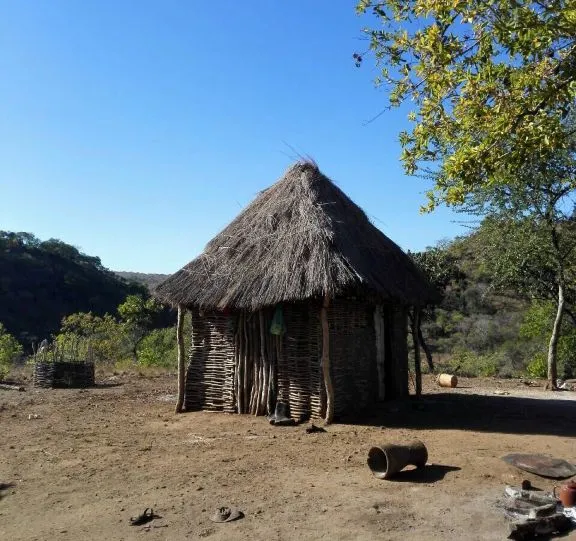
Originally published on A Plague on Both Houses substack where you can also access an audio version of this article.
“The impact of European conquest on the African way of life… was far greater than almost any white man of the time appreciated. It was a complete revolution. To say this is not at all to say that their way of life had been idyllic… But it was to them an ordered and predictable system… It was above all freedom — freedom to live in accordance with customs and usages, superstitions and rituals handed down from immemorial antiquity; and freedom not to live in accordance with the overt and tacit rules of a European cash economy.”[1] – Robert Blake, A History of Rhodesia [emphasis added]
The entire calculus of the British in the impending war on the Ndebele, especially in its close link with the occupation of Mashonaland, can be summed up in the following words of the decision-makers involved:
Lieut. M D Graham in the Colonial Office remarked that he had:
“never believed that the permanent occupation of Mashonaland could be effected without a trial of strength between the white man and the Matabele.”
And, historian Arthur Keppel-Jones notes that Sir Robert Meade’s opinion in the Colonial Office “was exactly what Jameson’s and Rhodes’s had been before July [1893]:
“the longer the evil day [war with the Matabele] is put off the better, and the stronger will be the Company to deal with it.”[2] [emphasis added]
Manifest in these quotes is:
- agreement between the Colonial Office and the Company men on the ground regarding the inevitability of war with Lobengula following occupation of Mashonaland in order to secure the whole territory.and
- the question of war was only one of timing, with the Company wanting to wait for the moment when it was prepared.
Conquest of the AmaNdebele
Following the British South Africa Company’s (BSAC) occupation of Mashonaland in September 1890, Lobengula came under increasing pressure from his regiments to go on the attack. In February 1891, his Imbizo and Insuka regiments were adamant that the time for talk had passed, and that the king should now, in the words of a regiment spokesman, “allow them to go and exterminate the whites.”
Lobengula’s answer to this was: “You want to drive me into the lion’s mouth.”[3]
Lobengula continued to take the position that outright confrontation would be inviting the same fate as that which befell Zulu King Cetshwayo, whose defeat by the British Empire in the Anglo-Zulu War of 1879 marked the end of the independent Zulu Kingdom. If Lobengula were able to continue to walk the tightrope with the BSAC, other potential invaders, and his own regiments thirsting for blood, then his kingdom would survive and he could tolerate the presence of the BSAC in Mashonaland.[4] Complicating matters, the Mashona, having acquired some rifles in a deal with the Portuguese in 1889, were no longer a soft target for the Ndebele.[5]
From the British perspective, and as discussed in Part II, the assignment of sovereignty over Mashonaland to Lobengula in the Rudd and Lippert concessions was a ruse to give credibility to the BSAC’s ambitious claims over the vast territory that Rhodes coveted. Lobengula’s acquiescence to the BSAC occupation of Mashonaland proved that to be true, up to a point, in that it signified Lobengula’s paramount concern was to remain unmolested in his own territory. And yet the occupation of Mashonaland provided the Company men with the impetus and tension they needed to bring Matabeleland itself under their full control.
The occupation of Mashonaland thus clearly represented the tightening of the noose around Lobengula and his Ndebele kingdom. This accentuated the need for Lobengula to strike a power balance with the Company. Letting Rhodes run amok in Mashonaland to mine for gold did not mean that he was prepared to relinquish his customary exactions on the Mashona in that territory.
However, from the Company’s perspective, Lobengula’s continued exactions were both:
- in conflict with the Company’s objective of total control over Mashonaland
and
- a pretext for the conflict they knew would have to take place if Matabeleland was to be annexed and brought under control along with Mashonaland.
Sharing a jurisdiction over Mashonaland, which was illegal in the case of the BSAC and fictitious in the case of Lobengula, was something to be endured in the short term until the moment for war with Lobengula was ripe. The tension between Lobengula’s professed right to treat the Mashona as his vassals and the BSAC’s need to impose full territorial control now led the BSAC to increasingly, and disingenuously, position itself as the protector of the Mashona.
In this atmosphere, incidents between the Ndebele and Shona chiefs began to take on a significance that was absent prior to the BSAC occupation of Mashonaland. A Shona chief, Nemakonde, known as Chief Lomagundi, operating in an area with very few Whites, was singled out by Lobengula in November 1891 for disciplining. Nemakonde had shown the English where to dig for gold and had given them guides to lead them to the Zambezi. He had also failed to pay his annual tribute. When confronted on these matters by an Ndebele patrol, his reply was less than diplomatic, telling the patrol that he was no longer a slave of Lobengula and that he was now answerable to the BSAC. Lobengula responded by sending his men to discipline Nemakonde, which they did by dispatching him to the afterlife.
When Dr Leander Jameson, Rhodes’ close friend and the BSA Company administrator in Mashonaland, remonstrated with Lobengula over the incident, the latter responded with a question about who was sovereign in the territory. The concessions had recognised Lobengula’s sovereignty over the entire territory, but in taking him to task over this incident, the Company was imputing more rights than it had. Lobengula was now testing them on this.
It is important to re-emphasise that the Mashona, for their part, were not a party to their own annexation. Shona chiefs accepted it in the same way that a leaf accepts being blown by the wind. Some used it to strengthen their position against the Ndebele, and we have seen the price Nemakonde paid for that. Nevertheless, in the BSAC, some began to see the prospect of a shield from Ndebele aggression. If they had begun to see the BSAC as a shield in 1891, that would drastically change by 1896. But we must first deal with the Matabele War in October 1893, and the events leading up to that.
Notwithstanding that colonial legalism could not have provided a moral justification for the occupation and subsequent events in Mashonaland, I nevertheless referenced in Part II Claire Palley’s scholarly legal opinion on the matter of the BSAC’s illegal occupation and administration in Mashonaland that began in September 1890. With reference to this latest incident, Keppel-Jones concurs, pointing out that neither the Rudd nor the Lippert concessions “had given away the land itself or the sovereignty over it.” Even if you accepted that the concessions had been properly agreed, which they hadn’t, Lobengula had the final say since the rights were to be exercised on behalf of the King.[6]
A tacit agreement was allegedly reached regarding Ndebele/Shona territorial boundaries and, up until August 1892, “no white man was interfered with east of Jameson’s line; nor, apart from the punishment of Nemakonde, any black man.”[7] The absence of any solidity, verifiability, and agreement to these borders prompted Sydney Olivier in the Colonial Office to remark: “I have never seen anything in our correspondence of the nature of an undertaking on Lo Ben’s part to keep within any line.”[8]
Pressure on Lobengula by his warriors to respond more forcefully to increasing challenges to his power from the BSAC was a factor in incidents leading up to the Matabele War of 1893. In August 1892, there is a report of a raid that resulted in the deaths of some Shona women and children, and the confiscation of a White man’s rifle by an Ndebele patrol. From the perspective of diplomatic relations between the BSAC and Lobengula, Keppel-Jones reports these as “pin-pricks”.[9]
From December 1892 onwards, more incidents arose that irked the BSAC more than some Mashona deaths. These involved the cutting of BSAC telegraph wire, and again were insufficient causes for war.
But the next incident, as Keppel-Jones put it, “would light a fuse destined to burn all the way to Bulawayo [Lobengula’s capital].” The “Victoria incident” was a raid by Lobengula’s impis into territory that the BSAC regarded as Mashonaland, and it provided Jameson with the pretext for a military conquest of the Ndebele kingdom. Having invaded Mashonaland and annexed it, the BSAC now posed as the protector of the Shona, and claimed that Lobengula had breached agreed boundaries. Again, from a legalistic perspective, it was imputing rights it did not have but the incident was of a sufficiently incendiary nature that it could be used in diplomatic terms to escalate an all-out war.
Believing it to be “unprofitable to try to apportion the blame” given the conflicting accounts surrounding the incident[10], Keppel-Jones’ framework for analysing it is to ask: “who, on the Company’s side, made the decision for war, when, and why?” Though a useful framework, it must still be regarded as a secondary analysis superseded by acknowledging the supreme crime from which this and all others flowed – the BSAC occupation of Mashonaland in September 1890. The BSAC had no right to invade and annex Mashonaland in September 1890 on the basis of scraps of paper that did not have the agreement of the parties invaded – and this applies to both the Rudd Concession and the Royal Charter itself – and did not even pass the legalistic tests of colonial law. Once that crime had been committed, total subjugation was only a matter of time.
Was war inevitable? Although we have covered the occupation of Mashonaland in Part II, we will revisit the plans that led up to it since they demonstrate that conquest of Lobengula was very much on the cards well before the Mashonaland occupation, and that it was probably tactical foresight on Lobengula’s part that delayed his fate by another three years. It also shows that the occupation of Mashonaland itself, if it had failed, was intended to be a provocation for war.
In December 1889, a plan to draw Lobengula into a fatal conflict was drawn up by Rhodes, and a contract signed. I referred to that plan in Part II, but it is worth repeating here in order to show the BSAC’s determination to gain control of the entire territory by violent conquest of the Ndebele kingdom. That plan was aborted in preference for a less direct, albeit still confrontational, approach involving the Pioneer column occupation of Mashonaland in September 1890, which took a route skirting Ndebele territory. The aborted plan entailed:
“sudden assaults [on] all the principal strongholds of the Matabele nation… to so break up the power of the AmaNdebele… to reduce the country to such a condition as to enable the prospecting, mining and commercial staff of the British South Africa Company to conduct their operations in Matabeleland in peace and safety.”[11]
A manufactured incident involving disputed territory was to be the trigger for the assault.
Lobengula had in fact read the Rhodes camp correctly in warning about being driven “into the lion’s mouth.” Although Lobengula formally repudiated the Rudd Concession, he decided to let the concession hunters “dig a hole” in order to stave off outright confrontation. It was this apparent mellowing on his part that stalled the aggressive approach planned in December 1889.[12] Instead, Rhodes opted for the occupation of Mashonaland using the volunteer column in September 1890. Lobengula would not be asked for permission to build the road to Mashonaland. He would “simply be informed… of the fact”, with the anticipated result being that:
“if Lobengula looks on in silence and does nothing, the Charter will occupy Mashonaland… If on the other hand, Lobengula attacks us, then the original plan [the aborted direct attack] will be carried out to the very letter… he must expect no mercy and none will be given him. … If he attacks us, he is doomed, if he does not, his fangs will be drawn, the pressure of civilization on all his borders will press more and more heavily upon him and the desired result, the dis-appearance for ever of the Matabele as a power, if delayed is yet the more certain.” J.R. Harris letter to J.D. Hepburn[13]
A clear statement then that Lobengula was damned if he did and damned if he didn’t. We therefore need look no further than the occupation of Mashonaland in 1890 for evidence that the Ndebele conquest was inevitable and that the Mashonaland occupation was hoped to be the first and last gambit to draw Lobengula into a fatal conflict.
Keppel-Jones’ interrogation of the archives also reveals that:
“Within the first few months of the occupation of Mashonaland [Major Thomas] Maxwell [in the employ of the BSAC], in Bulawayo, reported on several occasions that Lobengula’s days appeared to be numbered: ‘they intend snuffing him out next winter’.”[14]
In November 1891, J S Moffat’s assessment was: “there is no need for a row and that, if it comes, it will probably be provoked by ourselves.”[15]
Benjamin ‘Matabele’ Wilson, a high-profile prospector in Matabeleland, and frequent visitor to Lobengula’s kraal, was of the view that “nothing will ever be done in Matabeleland until the people are put down”, although he is also on record saying: “I do not want to pose as a champion of Lobengula, I only ask for fair play for a black man who stood by the white men to the end of his life.” This confirms Lobengula’s policy of treating the Company men with kid gloves for fear of inviting upon himself the demise he inevitably could not forestall.
When seen through the wider lens of BSAC occupation, and the inevitability of the military confrontation sought by the BSAC to pacify the Ndebele, the Victoria incident was simply the spark that was seized on by the BSAC to light a fire under Lobengula. What now follows is a summary of the incident and its consequences.
Some Shona living on the ‘White side’ of the highly tenuous boundary stole cattle belonging to an Ndebele regiment on the other side of the so-called border. Several Ndebele asserted many years later that it was a “put-up job” by settlers to provoke Lobengula into an attack. This has not been proven, and there are reasons for accepting and rejecting the theory. That said, it is clear that Lobengula’s unwillingness to overlook the incident and the severity of the regiment’s action for redress speaks to the tensions within Lobengula’s camp that I have alluded to, as well as those building up between Lobengula and the BSAC in the wake of its occupation of Mashonaland.
On 28th June 1893, determined to keep the peace with the BSAC, Lobengula dictated a letter to James Dawson, a BSAC/Lobengula go-between who was in the thick of it. The message was for Captain Lendy in the BSAC and it advised him that an impi was being dispatched to punish the cattle rustlers, and that he had no quarrel with the White men. He added that if the offenders took refuge with the Whites, they should be surrendered to the impis for punishment. We can be reasonably sure that ‘punishment’ meant death. In the event, the letters did not arrive until after the impi’s attack. Keppel-Jones believes that the commander of the impi, Manyewu, deliberately delayed the letter’s course in order to increase the opportunity of a more murderous attack.
Following the attack, on 10th July, Manyewu demanded the release to him of some Shona who had sought refuge with the BSAC. BSAC police command at Fort Victoria sought Jameson’s advice and were ordered not to release the Shona to the impis under any circumstances. In between the 10th July and the 18th July, when Manyewu was summoned to an indaba with Jameson at Fort Victoria, the BSAC’s position had hardened.
The High Commissioner in Cape Town bombarded Lobengula with telegrams, one of which warned that Lobengula was bringing on himself “the punishment that befell Cetewayo and his people.”[16]
On 17th July, Jameson received a message from Rutherfoord-Harris, the BSA Company Secretary in Cape Town, advising that: “Mr Rhodes understands that you may find it necessary in the interests of the Mashonas, women and children, to drive the Matabele away, in this he thoroughly concurs, but he says if you do strike, strike hard.”
Having mistakenly believed that relations with the BSAC would remain stable as long as Whites remained unmolested, Lobengula was unprepared for this sudden change in wind.
On 18th July, Jameson informed Manyewu at an indaba at Fort Victoria that he had an hour to leave Victoria and return to Matabeleland territory. Lendy was given instructions to escort them out and to shoot to kill if Ndebele impis resisted.[17] About nine Ndebele (the number is not certain) were killed by Lendy’s patrol, including a young man who had played a prominent role in the Ndebele reprisal that sparked the whole furore and had been earmarked by Lendy’s men for revenge. Lendy’s order to fire had been unprovoked.
On Lendy’s return to Fort Victoria, he lied about what had happened in explaining the deaths, saying that he had been fired upon by 300 Matabele and, in returning fire, had killed some 30 of them.[18] This false account may have served to bolster Jameson’s confidence in dealing with the Matabele for once and for all. Lendy’s account offered the prospect of an easy routing of the Ndebele – a small party of 50 settlers had routed an enemy force six times its size. “War with Lobengula could thus be seen in a new light.”[19]
An account by Ivon Fry, one of Lendy’s patrol, captures the hubris and exhilaration that fuelled the sudden change in calculus:
“Then we went back to Fort Victoria. When we reached the town, the walls of the Fort were still crowded with people. Jameson came out and Lendy rode forward and said ‘Doctor, you told me if I struck I was to strike hard; and I think I have accounted for 300!’ Jameson then turned round to the people on the walls and said: ‘I hereby declare war on the Matabele!’”[20]
Jameson asked for an estimate of how many men would be needed to defeat the Ndebele. When the reply of one thousand came back, Jameson did not hesitate in his response: “I’ll do it.”
Arthur Keppel-Jones records of Leander Starr Jameson:
“His intelligence, such as it was, was misdirected and circumscribed, but the main root of his follies was a mercurial temperament. After drinking a glass of sherry at the age of six, he is said to have exclaimed, ‘Now I feel as if I could go and do everything.’ That is what we shall see him trying to do.”[21]
Jameson spent the entire evening of the 18th July in telegram communication with Rhodes and Loch (High Commissioner of the Cape Colony) on plans for war. By the next morning, the plan had been sketched out, and was acted on with very little modification.
With the Company finances in a parlous state, and Rhodes having to finance the war himself, the same pirate’s ethos that had suffused the Pioneer Column’s occupation in September 1890 resurfaced. Every member of the invading force “was to be rewarded with a farm of 3,000 morgen [6,000 acres] in Matabeleland, fifteen mining claims on reef, and five alluvial claims.”[22] Provisions were also made in the agreement for sharing the “loot”, mainly anticipated to be cattle. As Keppel-Jones remarked, “it was nothing less than a contract for robbery under arms.” In the final analysis, all colonists are, to varying degrees, pirates, the only question being where they are in the chain of command.
Letters that Lobengula sent to Moffat, Loch, and the Queen in August 1893, were unmistakably intended to avert war. By 5th October, all preparations were complete and ‘border’ incidents had been faked to fabricate Ndebele provocations.[23] Right up until 16th October, Lobengula continued to dictate pleading messages, the last of which was given to Dawson, the White prospector and go-between who was with Lobengula in his kraal in Bulawayo. Neither Dawson nor Lobengula actually understood that the Company was now firmly on the war path.
When Dawson tried to explain the state of Lobengula’s mind and his unwillingness to go to war, Jameson was dismissive:
“Dawson’s information, living at Bulawayo with the King, is of no value – the King being a master of deceit and his word utterly unreliable.”[24]
The Colonial Office’s response from Sydney Olivier to this was:
‘‘Whether or no Lobengula is ‘a master of lies and deceit’, as Dr. Jameson describes him, he is certainly a master of the art of sending messages which make the case against him look very queer.”[25]
Two BSAC columns invaded from the east and one from the south in Bechuanaland. The first battle was at Shangani on 25th October 1893, where 650 BSAC volunteers engaged 4000 – 6000 Ndebele. The Maxim machine gun, a new innovation in European warfare, was used in this battle to devastating effect; the Ndebele suffered an estimated 600 casualties. Of the 61 casualties on the BSAC side, most were Shona camp followers, and even then most were shot by their own side in the confusion of the battle. Only one White volunteer was killed and six wounded.
At the Battle of Egodade on 1st November, the Maxim gun claimed 500 of the 700-strong Imbizo regiment. In total, perhaps 800 Ndebele fell. Only three BSAC volunteers were killed. “The carnage lasted not much more than an hour, and it decided the fate of Lobengula’s kingdom.”[26]
By the time the Company columns reached Bulawayo on 4th November, Lobengula had burnt down his home at Umvutshwa and fled north with his household. As long as Lobengula was still at large, the Ndebele would not surrender, and so the settlers’ efforts turned to coaxing Lobengula with messages to return and surrender. He was pursued by Company patrols, but evaded them.
According to an account many years later of an Ndebele boy who travelled with the King’s party, the King committed suicide and was buried in a cave, as was customary for Kings. The Ndebele man claimed to have been in the King’s entourage, and to have witnessed his drinking the poison.
Keppel-Jones’ line drawn under the 1893 Matabele War:
“Whether or not the Ndebele were defeated in 1893 is largely a question of semantics. The Company robbed them of land and cattle, and imposed on them a system of forced labour, punishments not tolerated by an undefeated people. Yet their potential for resuming the fight was left intact. The Company and its men discovered that truth in 1896.”[27]
Uprisings of the AmaNdebele and the Shona
“Our forefathers were rich and comfortable, with lots of cattle, sheep, goats, fertile lands and flourishing homesteads. But since the introduction of colonial capitalism, we have been made hewers of wood and drawers of water in the land of our birth.” – Josiah Tongogara, Military Commander of ZANLA forces that fought the Rhodesian regime from 1966 to 1979.
Following the elimination of Lobengula, legalism once again reared its dissembling head as debate ensued over how to formalise British power over the territory. The Matabeleland Order-In-Council of 18th July 1894 was the instrument by which the Crown, in partnership with the BSAC, arrogated to itself power to govern the people of Mashonaland and Matabeleland. Any feigned anxiety about the legalities of governing Mashonaland were now put to rest as the conquest of Matabeleland implied the conquest of Mashonaland.
But in failing to capture Lobengula, they were faced with yet another legal knot that could not be untied. Lobengula had not conferred the power. It had been acquired by conquest, and conquest meant annexation. But annexation at that time “was being shunned like the plague.”[28] New anxieties over legalism had arisen.
The Matabeleland Order-In-Council of 18th July 1894 was also the starting point of Rhodesian constitutional development, under which a series of Constitutions in which Africans had no say would evolve to entrench the coloniser’s interest.
In the calamity[29] that was Rhodesia, we see from the very beginning a segregated system manifesting in early legal proclamations. Roman-Dutch law was established in the territory, but in civil cases between Africans, “native law” was to apply.[30] One way for the native, and another for the alien who was now in the process of claiming the native space for himself. And since it would be problematic for a newly subjugated people to own firearms, exceptional legislation would be required for “the natives” regarding arms and ammunition.
Following the Matabele conquest in 1893, the impecunious Company wasted no time in conditioning its new subjects to European governance with the imposition in June 1894 of a hut tax of ten shillings per hut. It was of course preposterous to impose a financial tax on a people who were not employed or integrated into a monetary economy, but the method to the madness lay in forcing young men into wage labour on European-occupied farms and mines in order to pay the tax.[31]
The tax was another brazen assault on African life, and it was enforced with a shamelessness to match. Commissioners were appointed who, in turn, paid African policemen to act as tax collectors. A commissioner’s record describes how the White Chief Native Commissioner, J S Brabant, dealt with a Chief’s resistance to the first tax collectors. After having his African staff flogged for failing to bring in the tax, he confronted Chief Guripira directly:
“One of the counsellors said something to which Brabant evidently took exception and on continuing to be insolent Brabant took a jambok [leather whip] out of a police boy’s hand and struck him with it. Immediately Guripira and his counsellors made a dash for liberty but most of them were stopped. Guripira then opened a box he had brought with him and displayed a helmet and breastplate of brass together with a sword and belt and sabretash; this he offered to Brabant as a peace-offering, but Brabant spurned it with his foot and called upon everybody to go raiding the country … He explained to Guripira that he could either go in person or send his counsellors to tell his people that we were going to burn and shoot everything we saw until he sent to stop us and ask for mercy, but that before we would cease he would have to fill the valley with cattle for us to pick from for hut tax and that he was also to furnish us with 200 of his picked men to go and work in the mines … We then proceeded down the valley in search of something to destroy. The police boys and messengers and camp followers scattered over the hills and burnt down all the kraals they came across until the whole atmosphere was dense with smoke…”[32]
The hut tax was one way of forcing the African into labour on mines, but it was not the only means at the disposal of the Native Commissioners:
“In March 1893 a headman at Amanda’s kraal (Mazoe) replied to a demand for “boys” that ‘his men were not going to work for white men and that if Police came he would fire on them.’ Police came, arrested the headman, fined him six goats and three cattle, and gave him fifty lashes in the presence of his people.”[33]
Crucially, a Land Court was set up to administer the seizure of land in an ‘orderly’ fashion, bloody conquest having now been completed.[34] Company grants of stolen land aligned with the ethics that had been displayed in all dealings leading up to the Ndebele war. Land was dished out as rewards or enticements for political favours. Keppel-Jones remarked that Jameson was so generous to his friends with free grants “that the supply of land was in danger of running out.” Already by 1893, Rhodes had to halt free grants except in special circumstances. Sir William Milton[35], after Jameson’s demise in 1896, was appalled “that Jameson has given nearly the whole country away to the Willoughbys, Whites and others of that class so that there is absolutely no land left which is of any value for settlement of immigrants by Government… I think Jameson must have been off his head for some time before the raid [referring to the failed Jameson raid into the Transvaal to overthrow the independent Boer government there].”[36]
Sir John Willoughby, mentioned by Milton above, and a key ally of Rhodes in consolidating control over Mashonaland, received a grant in April 1892 of 600,000 acres in Mashonaland.[37] Keppel-Jones observed that “altogether, of 15,762,364 acres alienated by 1899, 9,276,222 acres were in the hands of companies.”
Keppel-Jones cites one of the more absurd cases of free land grants in Rhodesia:
“In 1895 Alfred da Fonseca, a Cape Town schoolboy, cut his classes, called on the prime minister (sending in a note marked “Urgent”), told Rhodes of his desire to go to Rhodesia, and was given a kindly reception. When he explained that he wanted to farm, not to mine, the prime minister became enthusiastic… Shortly afterwards Alfred descended from the coach in Bulawayo with a grant of 33,000 acres… Such examples make a farce of the solemnly promulgated rules and regulations.”[38]
Reflect on that the next time you read a press report about the Zimbabwe government’s ‘controversial’ redistribution of land – reclaiming stolen goods – which began in 2000.
The question of land was a hot issue in the first Legislative Council elections of 1899, not because settlers thought an injustice had been done to the indigenous inhabitant, but because they feared that there would not be enough left for settlers as a result of Company corruption. One settler who voiced his concerns during electioneering complained that the locking up of land by big landholders was preventing settlement. Sam Lewis, a candidate in the elections, complained that there were only 10,000 “people” in the country when there could be 150,000.[39] By “people” he meant settlers, not indigenous inhabitants – they were not people. As we shall come to see in subsequent parts of this essay, the word people was implicitly understood to exclude “the native”.
After land, cattle was the most important source of wealth for the Ndebele and, following the Matabele war at the end of 1893, Company patrols took the cattle belonging to the Ndebele as war booty. They were distributed to White settlers under the auspices of a “Loot Committee”, with preferential rights given to the BSAC volunteers who were victorious over Lobengula’s regiments. They then sold their rights to traders and farmers.[40] The number taken by the Company from the Ndebele was estimated at between 80,000 and 200,000.[41] On 15th June 1895, a proclamation was issued declaring that “all such cattle as were in Matabeleland on or before the 31st of December, 1893, and the offspring of such cattle . . . now in the possession of any native resident in Matabeleland” was vested in the Company.[42] In a placatory gesture, 41,000 were returned in December 1895.[43]
In Mashonaland, rising resentment of occupation and forced labour began building up in 1891. The reaction from the settlers was righteous indignation at Shona insolence. The Company’s chief mining expert complained that:
“a not disguised independence and recklessness on the part of the natives was felt by us at the beginning of the rainy season [of 1891-2]. It showed itself in an unwillingness or in a flat refusal of local chiefs to furnish men for labour, or aid in getting labour. Also in a marked reluctance to trade for food and fodder.”[44]
It marked the beginning of a period in which the settlers would attempt to mask their fear with heavy-handed demonstrations of power. As Keppel-Jones noted: “The demonstration of power had been necessary to conceal the real weakness of the whites. Their security depended on the awe they inspired in the blacks.”
The opportunity for rebellion arose in early 1896 following Jameson’s raid, plotted with and approved by Rhodes, into the Transvaal to overthrow the government of the independent Boer Republic. Jameson and Rhodes had decided that they would use the bulk of the Company’s police to conduct the raid, leaving the numbers in Rhodesia greatly depleted.
The Ndebele uprising generally preceded the Shona one. But some Shona rose with the Ndebele in March 1896. “The military and civil apparatus of the Ndebele state had not been destroyed in 1893, and it was within this apparatus that the rising was plotted.”[45]
The folklore version of the uprising portrays the whole Ndebele and Mashona population rising up as one great mass. The reality is that a small minority of Ndebele fought with the Company and Imperial forces. Beaten in battle in 1893, a few had chosen to side with the colonising force. There was certainly enough unity within the Ndebele nation to have won the first encounter, but strategic military errors sealed their fate.
The Shona did not have a centralised authority, and lacked the military system that characterised the Ndebele nation. This is essentially why the British in the lead-up to occupation and conquest chose to negotiate with the Ndebele, and why they expediently attributed to Lobengula a fictive sovereignty over the entire territory. The Shona rebellion was hamstrung not only by internal politics of chiefdoms, but by relations with the Ndebele, and with the White settlers. Disunity was the more obvious reason for the failure of the Shona rebellion. Nevertheless, “once the first blows had been struck, the revolt spread through parts of Mashonaland like a veld fire.”[46]
Imperial reinforcements had to be called in to crush the rebellions and, by early August 1896, the situation in Matabeleland had reached a stalemate, with the main problem facing both sides being that of supplies. The Ndebele rebels had retreated to the Matopos Hills and were surrounded by enemy forts. In time, they would be comprehensively defeated, but Company and Imperial forces were not well supplied in the initial stages. So the question really was one of time. From a BSAC perspective, the longer it dragged out, the greater the damage to the Company’s finances, since although imperial reinforcements had been sent, the Company was footing the entire bill for putting down the rebellion.
Rhodesia was very personal to Rhodes and, despite no longer holding official public office – he had had to resign from the Cape Colony premiership following the Jameson raid debacle – he had inserted himself into the thick of it, and played a significant role in bringing matters to a close. It is hard to know precisely which factors ranked uppermost in his decision to negotiate a truce with the Ndebele, but the cost of war to the company in which he had a substantial investment must have kept him up at night. In early August 1896, risking his life to save his life’s work, he and three other trusted private companions sat down with the leaders of the Ndebele rebels in their territory to agree the terms of peace.
Financial considerations had to have been a factor in bringing the rebellion to an end sooner rather than later, and this seems to be borne out by a confession of one of Rhodes’ companions present at the peace indabas. Having been in a unique insider position to speculate on the Company’s shares, Stent later recorded: “We made little money out of our shares. We held on too long!”[47]
As part of the terms, Rhodes agreed to disband the Native Police, and guarantee the security of the indunas (headmen) who were at the meeting. There were other, less explicit promises of reforms. The question that had haunted Zimbabweans since September 1890, and continues to do so, was raised forcefully in the second meeting on 28th August 1896, which was attended by several other imperial and company officers. Vere Stent, journalist and correspondent for the Cape Times, was present at both the smaller first meeting and this later one. He recorded the following:
“a young chief… put a pertinent question: “Where are we to live, when it is over?” he said. “The white man claims all the land.” Rhodes replied at once: “We will give you settlement. We will set apart locations for you; we will give you land.” The young chief shouted angrily: “You will give us land in our own country! That’s good of you!” The retort was difficult to counter, and there was silence, while the elder chiefs endeavoured to soothe the tumult which was arising. The young man spoke again: “Where will you give us land?” he said. “Well,” said Mr Rhodes, “you seem very fond of the Matopos [where the rebels had retreated and were surrounded]. We will give you land there.” There was laughter at this, for the natives are quick to appreciate a counter-thrust in debate.”[48] [emphasis added]
The above exchange contained the essence of the struggle for Zimbabwe.
Though negotiations had not yet been concluded at that second meeting, Sir Richard Martin, who had assumed overall command of the BSAC and imperial forces in May 1896, and who was not present at that meeting, began to register strong disapproval of the terms Rhodes was negotiating. Martin objected to everything about the negotiations, including Rhodes’ presence at them. He complained that the chiefs lacked an attitude of “submission”. He insisted that conditions of surrender should be dictated to them, and that none of the chiefs at the negotiations should escape trial. Martin sought an almost unconditional surrender, whereas Rhodes and the indunas were looking further out and negotiating the terms of peace.
More indabas followed in September and October 1896. It was in this period that Rhodes made known his wish to be buried at the Matopos Hills, outside Bulawayo, where his grave remains to this day, despite occasional efforts to return his body to the United Kingdom.
The upshot of the indabas was an almost total capitulation by the Ndebele indunas, dictated by the military reality on the ground. In November, imperial officers announced that the fighting was over in Mashonaland too.
However, when company police visited a rebellious chief in Mashonaland in the middle of December asking him if he intended to live in peace with the White man, he replied that “if they [the White men] would pay hut tax to him [the chief], he would allow them to live in Salisbury.” He was not the only defiant Shona Chief. In January 1897, the paramount chief in the district of Marondera declared:
“I have nothing to talk to the white man about… What do you want to return for? Are you leaving anything behind you? Go away and remain away. I wish to have nothing to do with you white men. Go and live in Chimoio [Portuguese territory] and I will send boys to work for you there if you want them.”[49]
These defiant statements foreshadowed continued resistance in 1897 once the rainy season was over (February/March) and the crops had been reaped. But by December 1897, the Mashonaland rebellion had been quelled by BSAC patrols. Keppel-Jones characterises the difference in the way the two uprisings were suppressed:
“In Mashonaland the rebellion was suppressed piecemeal, by dynamiting cave after cave, killing or capturing chief after chief. There were no negotiations with the Shona as a group, no indabas, no terms of peace. But the rebellion of the Ndebele had been ended by indabas and agreements.” [50]
In the wake of the Mashonaland uprisings, an 1898 BSAC report offered its analysis of causes:
“The Mashona race had always been regarded as composed of disintegrated groups of natives… cowed by a long series of raids from Matabeleland… and incapable of planning any combined premeditated action. The result has proved that their intelligence has been underrated and their cunning, it cannot be courage… had not been sufficiently appreciated. … With true Kaffir deceit they have beguiled the Administration into the idea that they were content with the government of the country and wanted nothing more than to work and trade and become civilised; but at a given signal they cast all pretence aside and simultaneously set in motion the whole of the machinery which they had been preparing.”[51]
A humane counterpoint to this vicious assessment by the BSAC came from a Catholic missionary, Fr. Richartz ,whose explanation of causes was more rational:
“Often the Natives were simply driven away or told that they had to do certain services if they would like to continue to make gardens on their old place. Though we had no native Kraal or Garden on our farm when we arrived, nevertheless old [Chief] Chinamora very often showed his surprise when we spoke of ‘our ground, boundaries, beacons etc’ – Who gave you this land?’ he would often ask.”[52]
Indeed. “Who gave you this land?”
It was of course not given, but taken by conquest.
Professor Reginald Austin sums it up by saying:
“Southern Rhodesia was thus one of the very few cases in Africa of colonial acquisition by undisguised conquest… Rhodes, the BSAC and the settlers, granted permission only to exploit minerals by the king, manipulated the situation and the British Government into a violent confrontation in order to take complete control.”[53]
As we will see in the essay on Land in Part V, The Judicial Committee of the Privy Council confirmed this in its landmark ruling on land ownership in which it stated that the Crown owned the land by virtue of conquest.
The uprisings – known as Umvukela in Ndebele and Chimurenga in Shona – cannot be viewed through the lens of what might have been had they succeeded. A massacre of the small White population in the country at that time by the Ndebele and the Shona would have been met with imperial retribution. Rather, the uprisings were events that rocked the settler and imperial establishments, and served to emphasise that the remaining 83 years of colonial rule were borne under duress. They set the tone for political and social relations between the settler community and the indigenous inhabitants. It was to be a relationship built on mutual distrust and fear, and cemented by segregated structures built on the foundations of violent conquest.
The tales of atrocities committed on each side would serve as glowing embers handed down from one generation to the next, lighting a second fire in April 1966 that would rage until December 1979:
“For two generations the BSA Police would boast that they had never since 1897 had to fire a shot in anger. Peace and security prevailed everywhere. But beneath the calm surface there was something that was not peace. White women and children had been hacked to pieces, black women and children had been blown up in caves with dynamite. The hangman and the firing squad had disposed of religious leaders and great chiefs. The Shona people had fought (brutal though it was) a brave fight to recover their country from the invaders. The effort exhausted them for a long time. The victors faced the task of reconstructing and uniting a land divided by a river of blood.”[54]
As we shall see, uniting the land was the last thing on the victors’ minds. Rigid separation in land, employment, education, and society generally, became entrenched.
In Part IV, I will examine the character of Rhodes and Rhodesians as revealed by the occupation and conquest. Consider it a pause in the main narrative, but a useful one since systems of oppression do not operate in vacuums. They are operated by people, and the less moral the people, the more oppressive the system.
If you liked this article but don’t want to commit to a paid subscription, please consider rewarding my writing using the BuyMeACoffee link below. Thank you!
[1] Robert Blake, A History of Rhodesia, Eyre Methuen Ltd., London, 1977, Ch. 11, Pg. 155-6.
[2] Arthur Keppel-Jones, Rhodes and Rhodesia: The White Conquest of Zimbabwe 1884-1902, Kingston and Montreal, McGill-Queens University Press, 1983, Ch. 6, pg. 248.
[3] E. Stokes and R. Brown (eds.), The Zambesian Past: Studies in Central African History, Manchester University Press , 1966, pg. 80
[4] Arthur Keppel-Jones, Rhodes and Rhodesia: The White Conquest of Zimbabwe 1884-1902, Kingston and Montreal, McGill-Queens University Press, 1983, Ch. 6, pg. 228.
[5] Ibid., Ch. 6, pg. 228.
[6] Ibid., Ch. 6, pg. 231.
[7] Ibid., Ch. 6, pg. 233.
[8] Ibid., Ch. 6, pg. 244.
[9] Ibid., Ch. 6, pg. 234.
[10] “The origin and the course of this event are difficult to trace, for the usual reasons: the black and the white witnesses disagree at many points; the white evidence was recorded at the time, or soon afterwards; some black evidence was recorded then too, but by white men; some in 1937-40 by R. Foster Windram, who was himself completely objective—but he was recording old men’s memories, which are notoriously subject to the ravages of time.” – Keppel-Jones, Rhodes and Rhodesia: The White Conquest of Zimbabwe 1884-1902, Ch6, Pg 236.
[11] E. Stokes and R. Brown (eds.), The Zambesian Past: Studies in Central African History, Manchester University Press , 1966, pg. 89.
[12] Ibid., pg. 89.
[13] Ibid., pg. 90.
[14] Keppel-Jones, op.cit., Ch. 6, pg. 236.
[15] Keppel-Jones, op.cit., Ch. 6, pg. 236.
[16] Keppel-Jones, op.cit., Ch. 6, pg. 240.
[17] Keppel-Jones, op.cit., Ch. 6, pg. 242.
[18] Keppel-Jones, op.cit., Ch. 6, pg. 243-4.
[19] Keppel-Jones, op.cit., Ch. 6, pg. 244.
[20] Keppel-Jones, op.cit., Ch. 6, pg. 244.
[21] Keppel-Jones, op.cit., Ch. 2, pg. 88.
[22] Keppel-Jones, op.cit., Ch. 6, pg. 249.
[23] Keppel-Jones, op.cit., Ch. 6, pg. 258.
[24] Keppel-Jones, op.cit., Ch. 6, pg. 260.
[25] Keppel-Jones, op.cit., Ch. 6, pg. 264.
[26] Keppel-Jones, op.cit., Ch. 7, pg. 274.
[27] Keppel-Jones, op.cit., Ch. 7, pg. 286.
[28] Keppel-Jones, op.cit., Ch. 8, pg. 331.
[29] Keppel-Jones, op.cit., Ch. 9, pg. 369.
[30] Keppel-Jones, op.cit., Ch. 8, pg. 332.
[31] Keppel-Jones, op.cit., Ch. 10, pg. 400.
[32] Keppel-Jones, op.cit., Ch. 10, pg. 401.
[33] Keppel-Jones, op.cit., Ch. 10, pg. 403.
[34] Keppel-Jones, op.cit., Ch. 8, pg. 336.
[35] Milton took over the administration of the BSAC in Southern Rhodesia in 1896 following Jameson’s arrest in the wake of the botched raid into the Transvaal.
[36] Keppel-Jones, op.cit., Ch. 9, pg. 369.
[37] Keppel-Jones, op.cit., Ch. 14, pg. 559.
[38] Keppel-Jones, op.cit., Ch. 9, pg. 369.
[39] Keppel-Jones, op.cit., Ch. 14, pg. 561.
[40] Keppel-Jones, op.cit., Ch. 9, pg. 374.
[41] Keppel-Jones, op.cit., Ch. 9, pg. 376.
[42] Keppel-Jones, op.cit., Ch. 10, pg. 399.
[43] Keppel-Jones, op.cit., Ch. 10, pg. 398.
[44] Keppel-Jones, op.cit., Ch. 10, pg. 410.
[45] Keppel-Jones, op.cit., Ch. 11, pg. 438.
[46] Keppel-Jones, op.cit., Ch. 12, pg. 473.
[47] Keppel-Jones, op.cit., Ch. 12, pg. 501.
[48] Keppel-Jones, op.cit., Ch. 12, pg. 504.
[49] Keppel-Jones, op.cit., Ch. 12, pg. 513.
[50] Keppel-Jones, op.cit., Ch. 13, pg. 521.
[51] Alois S. Mlambo, A History of Zimbabwe, New York, Cambridge University Press, 2014, Ch. 3, pg. 45.
[52] Ibid., Ch. 3, pg. 47.
[53] Reginald Austin, Racism and apartheid in Southern Africa: Rhodesia, Paris, The Unesco Press, Ch. 1, Pg. 22.
[54] Keppel-Jones, op.cit., Ch. 12, pg. 517.

Comments are closed.